
Relocation
Moving to Phuket: where to start if you want a calm move, not a crash course in mistakes
The honest order of steps, from an expat who's lived on Phuket since 2019 and helped dozens of families relocate.
K. · updated June 2026 · ~8 min
Short answer
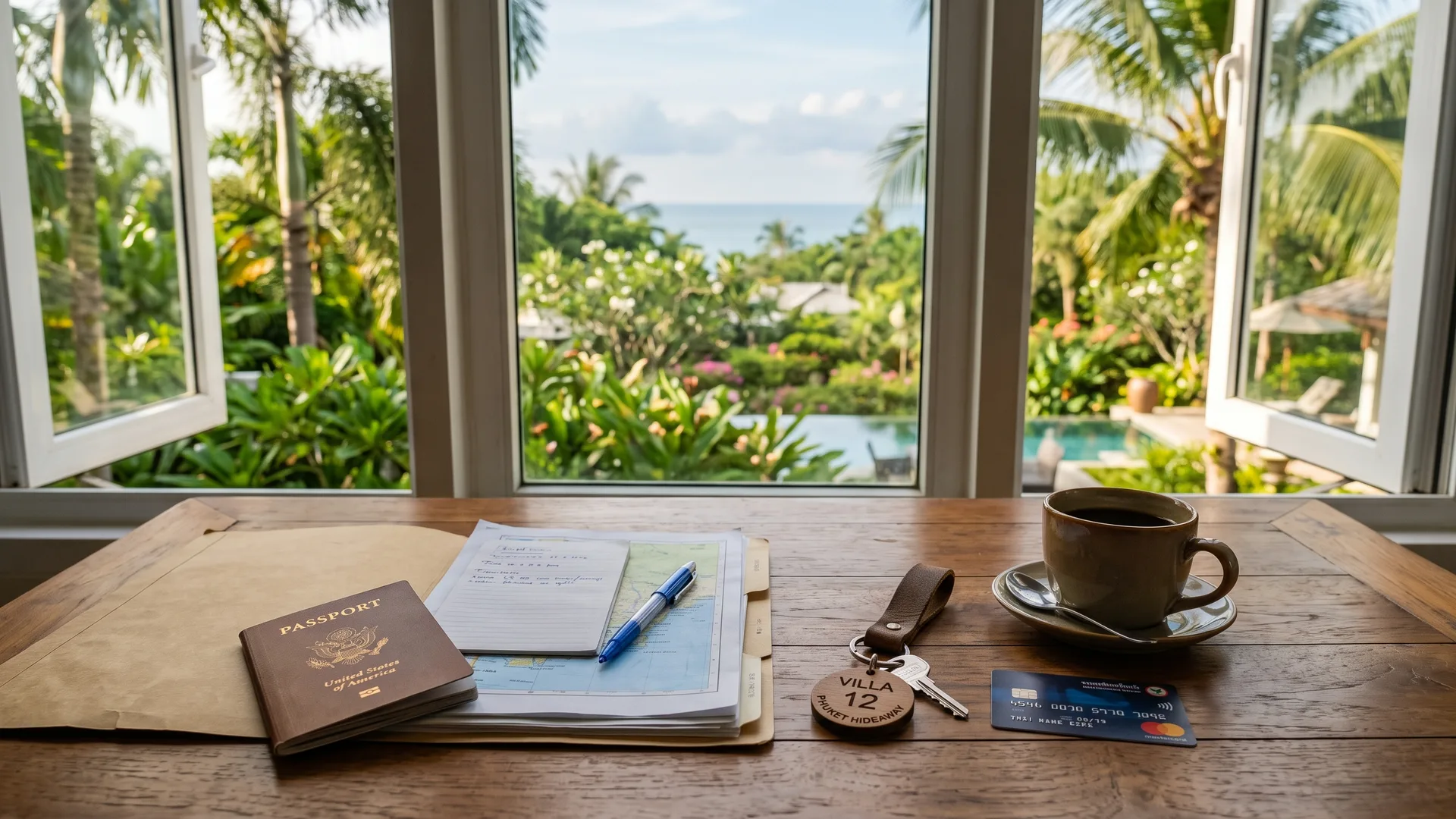
Moving to Phuket doesn't start with a visa — it starts with the right area: school, commute, infrastructure. The visa comes next, usually two weeks to a month; as of June 2026 the airport gives a 60-day stamp. A bank account needs a long-term visa, not a DTV. Immigration and the bank make the final call — we guarantee a clean process, not the outcome.
Where does the move really start, and why does the area matter more than the visa?
Start with how you'll live, not with paperwork. A visa won't answer the everyday questions: where your child goes to school, how long you'll sit in traffic, whether you can work from home in peace, whether there's sport, sea, and a market nearby. That's what decides whether island life works for you.
A nice view won't save a 40-minute school run each way, an internet connection that keeps dropping, or a grocery trip across the island. On Phuket, "15 minutes on the map" can turn into daily fatigue in the rainy season.
The order that works:
- Pick the area for your life scenario — family with kids, remote work, a season, a long-term move, or relocating for a business. These are different routes.
- Work out your rent and transport budget.
- Choose the visa path — not the one that's trending, but the one that fits your passport, age, family, income, timeline, and purpose.
- Prepare the bank and document package early: bank, residence certificate, Thai number, proof of income, insurance, translations.
- Only then think about buying a home or a car — rent for the first few months.
You pick an area for the task, not the photo:
| Life scenario | What to check first |
|---|---|
| Family with kids | school, nursery, clubs, healthcare, a calm commute |
| Remote work | quiet area, internet, coworking, cafés, transport |
| Active lifestyle | gyms, sea, beaches, yoga, easy routes |
| Long stay | balance of sea, restaurants, quiet, and service |
| Business relocation | logistics, staff, lawyers, accounting, footfall |
K. matches the area to your real situation: who's coming, for how long, with or without kids, whether you need a nursery, school, sport, a driver, a villa, or a condo. More on villas and neighborhoods.
Expats have a joke: almost everyone who moves on their own pays an "entrance ticket" — the money, time, and nerves lost on mistakes, middlemen, and doing things in the wrong order. Getting the order right shrinks that ticket.
Which visas do people usually consider for living on Phuket?
The visa depends on your situation, not on what's easiest right now: age, passport, family, work, income, timeline, and purpose. The main options as of June 2026 (rules change — check the current details before you apply):
| Visa / status | Who it's for | What to know (June 2026) |
|---|---|---|
| Tourist entry / visa exemption | Scouting, a first trip | The airport gives a 60-day stamp; you can extend it by 30 more days for a fee. Not a long-term strategy |
| Tourist visa | A first stage of a few months | Works while you look at areas, schools, and housing, before choosing a long-term status |
| Education (ED) | Study, language school | Up to 12–15 months. Enroll in an accredited institution, get a letter of acceptance. Apply from your home country (90 days) or convert from a tourist visa inside Thailand. Extend up to 12 months, government fee ฿1,900 |
| Retirement | Age 50+ | Pension/income from ฿65,000/month OR a ฿800,000 deposit in a Thai account; health insurance and a background check required |
| Property owner (category "B") | Buyers / renters of property | Renews yearly. A condo from ฿3,000,000 (freehold, within the foreign quota) OR a long-term lease from ฿85,000/month |
| DTV | Remote workers, freelancers, digital nomads | Up to 5 years, up to 180 days per entry, renewable. Work for foreign companies without a work permit. Spouse and children under 20 get dependent visas. You need: age 20+, liquid funds from ฿500,000 (crypto and investment portfolios don't count), proof of purpose |
There's no separate child visa: a child goes as a dependent on a parent's visa or gets student status through their school.
(Moving for a business isn't a visa but a separate legal structure. More on that below.)
What should you know about the DTV?
The DTV looks appealing, but it isn't a one-size-fits-all visa. It suits remote workers, freelancers, and digital nomads, and a spouse and children under 20 can join the main applicant. But the application has to rest on a real case: work for a foreign company, proof of activity, income documents, a clear purpose.
I wouldn't apply "just because everyone's applying." Refusals happen where the package is put together for show: no logic, documents that don't line up, someone forcing themselves into a category that doesn't fit. The right approach is to read the situation first, then choose the strategy, then gather documents. That's how we keep the refusal risk down.
How long does a visa take?
Plan for two weeks to a month — the exact time depends on the visa type, the country you apply from, how busy the offices are, and how clean your documents are. The common mistake is starting when the lease, the flights, and the school are already on fire: then you decide in a rush and overpay.
Better: settle your stay scenario before you fly; check your passport, dates, and proof of income early; work out which documents the kids need; choose the area and school before signing a long lease; don't pay big deposits without checking the property and the owner.
Can you open a Thai bank account in 2026?
Yes, but it's harder now, and only with a long-term visa (student, business, or owner) plus proof of income. You can't open one on a DTV visa. The bank looks at the grounds, not the wish: visa type, documents, source of income, your overall profile.
Banks usually ask for: a passport; a long-term visa or clear grounds for staying; a residence certificate; proof of income or source of funds (a tax return, business records, a property rental contract); a Thai phone number; sometimes insurance.
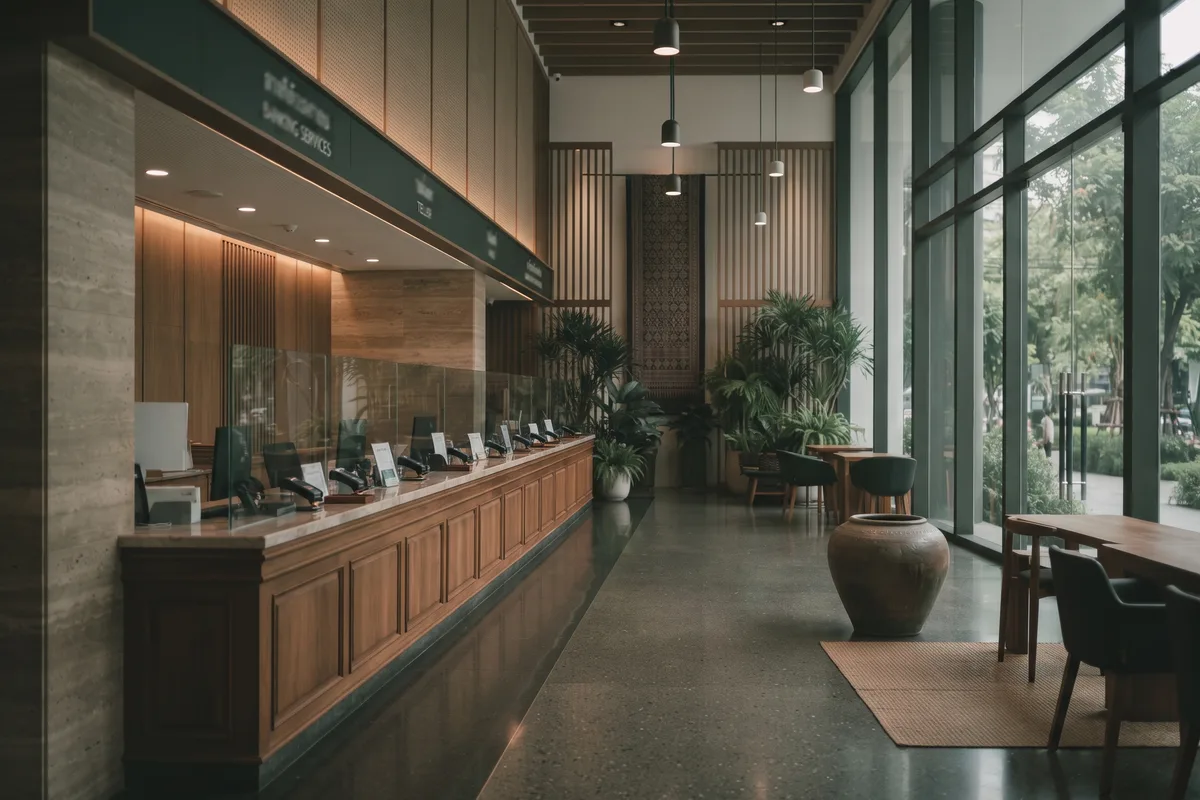
When the package is right, the branch visit takes about 1.5 to 2 hours: document check, account opening, app setup, and you can use it straight away. The final decision always sits with the bank, so we don't promise an account "by the name of the visa": first we look at your package, the bank, the branch, and the real odds.
What usually goes wrong when people do it alone?
The problem isn't that people "know nothing." It's that they don't know which step comes first and which only after a check.
Case 1. A villa deposit with no checks. A client found a villa himself, paid the deposit, flew in, showed up at the address — and it had already been let to someone else. Nobody met him, no documents had been checked, the middleman was unreachable, and there was no owner contact. On paper "housing was found"; in reality he had no home on arrival day.
Case 2. A blocked account. A woman on a retirement visa tried to restore an old, blocked account: queues, different requirements at different branches, papers asked for again and again. She couldn't do it alone. With us the package was put together properly, the branch was chosen, and it took 1.5 hours.
That's the "entrance ticket": the money and time people lose going through random middlemen or stitching a system together from chat-group advice.
Rent or buy a home and car right away?
For the first months, rent. You can't read Phuket from a map and photos: the same area can be perfect for a family and awkward for a remote worker, and a villa that looks great in a photo can be far from school, with a bad exit and a building site next door.
First live in the area; check the roads at different times of day; learn where the school, sport, sea, and healthcare are; compare a villa and a condo in real life; weigh the upkeep costs — then make long-term decisions. K. helps you start with a safe rental: choosing the area, checking the property and the owner, arranging viewings, agreeing terms. For getting around, see car and driver.
What if the move is about a business?
You can open a legal business on Phuket — but this isn't a "quick company on nominees." You need real directors, a sound structure, Thai employees, accounting, licenses for your specific activity, clear visa logic, and a lawyer alongside you. Nominee setups are risky now — there are plenty of criminal cases over them.
K. coordinates around the task: finding a lawyer and accountant, checking the company structure, licenses for the business type, staffing and basic operational support, the visa path, and the everyday relocation of your family or team. We don't lead people into grey schemes, and we say plainly where it's harder. More on relocation and business.
What does working with K. include?
K. is a private concierge on Phuket. We build the move as a route, from the first question to a calm life on the island. It can include reading your situation and goal; choosing an area for your family, work, and budget; advice on schools, nurseries, and sport; finding and checking housing; a visa strategy with specialist partners; document prep; going with you to the bank; help with translations and forms; transport and a driver; bringing in trusted lawyers, accountants, and insurers; and coordination after you arrive.
Cost depends on the task and how much support you need. Visas, banking, business, and relocation are quoted on request — every case has different documents, timelines, and risks. We guarantee not a government or bank outcome, but a clean process: the right sequence, vetted people, clear documents, and support without random middlemen.
Frequently asked questions
Where should a family with kids start?
Pick the area around the school or nursery first, not the other way round. Then housing, transport, visa, and bank. Start with a pretty villa and you can end up with long daily commutes and an awkward setup.
Can you come for a "scouting" trip first?
Yes, often the smartest move. Come, look at areas, schools, housing, and the island's rhythm, then decide on a long-term visa, a car, or property.
Which visa is best for living on Phuket?
There's no single best one. A remote worker might suit a DTV, study an ED, age 50+ a retirement visa, a business its own structure. Choose by your documents and purpose.
Can you open a Thai bank account without help?
You can, but it's harder in 2026. Requirements depend on the bank, branch, visa, and documents. Support means you don't run around blind and you assemble a package the bank will actually consider. You can't open one on a DTV visa.
Should you buy a home right after moving?
Usually no. Rent first, live in the area, see if it fits. Buying in week one is often an expensive mistake.
Does K. guarantee visa or account approval?
No. The decision always rests with immigration, the bank, or the relevant body. K. guarantees a correct process: reading your situation, preparing documents, support, and an honest read on the risks.
Tell us about your move
Moving to Phuket shouldn't start with mistakes, queues, and random chat-group advice. Message K. on WhatsApp: who's moving, for how long, with or without kids, your budget, and what matters to you. We'll read your situation and map out a clear first plan.